Brooklyn Condos for Sale
The condo market in Brooklyn, tracked as its own segment — what condos actually sold for in the public record, measured for condos specifically, not blended with houses.
What condos actually sold for in Brooklyn
In the year to September 2026, 3,539 condo sales were recorded with the City — every sale, including the ones never listed with a broker.
| Year | Median | Sales |
|---|---|---|
| 2019 | $820K | 3,632 |
| 2020 | $816K | 3,047 |
| 2021 | $950K | 6,121 |
| 2022 | $962K | 5,237 |
| 2023 | $955K | 3,329 |
| 2024 | $985K | 3,443 |
| 2025 | $1.04M | 3,539 |
The median recorded condo price in 2025 was 27% higher than 2019. Year-to-year movement in a median also reflects which buildings happened to sell, not value alone.
The condo stock itself
1,025 substantial condo buildings in Brooklyn, holding about 79,929 homes between them, and we hold a managing agent on file for 927 of them.
| Building | Homes | Built | Managed by |
|---|---|---|---|
| 18 Sixth Ave | 858 | 2019 | Urban Associates, Llc. |
| 100 Willoughby Street | 826 | 2014 | Avalonbay Communities, Inc. |
| 445 5th AvenuePark Slope South | 812 | 1920 | — |
| 595 Dean Street | 798 | 2021 | TF Cornerstone, Inc. |
| 85 Commercial Street | 766 | 2021 | Self-managed |
| 501 Surf AvenueConey Island | 735 | 1964 | Brightwater Towers Condo |
| 85 Jay StreetDowntown Fulton Ferry | 727 | 2018 | FirstService Residential |
| 33 Bond Street | 714 | 2015 | TF Cornerstone Inc. |
Where these come from. New York City’s public record of recorded sales, October 2025 to September 2026, with building details from the City’s property files and managing agents from HPD registrations. Recording lags a sale by roughly three months, so this describes the period stated rather than today. Sales of whole buildings are excluded — the City records those once per apartment, which would otherwise put one building’s price on dozens of “sales”. What a deed record cannot show is the listing side — days on market, asking prices and inventory come from an MLS, and Brooklyn homes are listed on one we do not carry yet.
Brooklyn condos by neighbourhood
Recorded sales in the year to September 2026, busiest first. Each figure is for the neighbourhood’s ZIP, not the street.
| Neighbourhood | Median | Sales |
|---|---|---|
| Williamsburg | $1.53M | 462 |
| Brooklyn Heights | $1.78M | 401 |
| Fort Greene | $1.78M | 401 |
| Park Slope | $1.61M | 309 |
| Prospect Heights | $1.41M | 284 |
| Prospect Lefferts Gardens | $3.18M | 177 |
| Clinton Hill | $1.28M | 169 |
| Borough Park | $900K | 153 |
| Boerum Hill | $1.6M | 150 |
| Brighton Beach | $650K | 148 |
| Sheepshead Bay | $650K | 148 |
| Greenpoint | $1.71M | 146 |
| Sunset Park | $591K | 123 |
| Bushwick | $845K | 121 |
| East Williamsburg | $815K | 117 |
| South Williamsburg | $815K | 117 |
| Bath Beach | $728K | 106 |
| Bensonhurst | $728K | 106 |
| Carroll Gardens | $1.75M | 103 |
| Dyker Heights | $995K | 101 |
| Sunset Park (East)-Borough Park (West) | $995K | 101 |
| Bedford-Stuyvesant | $1.05M | 69 |
| Kensington | $875K | 63 |
| Windsor Terrace | $875K | 63 |
| Ditmas Park | $585K | 47 |
| Crown Heights | $990K | 36 |
| Bay Ridge | $947K | 35 |
| Madison | $563K | 35 |
| Gravesend | $680K | 31 |
| Gravesend (East)-Homecrest | $680K | 31 |
| Mapleton-Midwood (West) | $660K | 31 |
| Midwood | $660K | 31 |
| Coney Island | $635K | 23 |
| Marine Park | $548K | 21 |
| Flatbush | $499K | 12 |
| East Flatbush-Erasmus | $940K | 5 |
Brooklyn Condo Questions, Answered
What do common charges cover for condos in Brooklyn?
Common charges fund the condominium's shared operations — staff, building systems, insurance on common elements, amenities, and reserves. Unlike coop maintenance, they do not include your property taxes, which are billed separately on your individual unit. Budgets and reserve health vary a lot between buildings, and reviewing them is a normal part of condo due diligence.
Is condo financing easier than coop financing?
Generally, yes. A condo is real property with a deed, so lenders treat it like other real estate, and the down payment is generally set by the lender rather than by the building, as it is in a coop. Condos also have no board interview.
Can I buy a condo with a low down payment?
Often, yes — condo down payments are set by your lender rather than the building, and some loan programs allow smaller down payments for qualified buyers (jumbo loans on higher-priced units typically require more). This is one of the clearest financing advantages condos have over coops, where the building — not the lender — sets the floor.
Can I rent out my condo?
Condo rental rules are set building by building — most allow it with fewer restrictions than a coop's proprietary lease would impose, but some cap the percentage of units that can be rented at once or require board notification. If buying an investment property or a home you may not always occupy is the goal, confirm the specific building's rental policy before you offer; it's one of the first things worth checking.
What is a right of first refusal in a condo sale?
Many New York condominiums hold a right of first refusal: the board can buy the unit on the same terms instead of approving your purchaser. Whether a given board exercises it or waives it is worth asking about. It adds a procedural step and some timing to the deal, but it is not the gatekeeping power a coop board has.
What is a 421-a tax abatement, and does it apply here?
421-a is a New York property tax abatement offered on qualifying new construction, phasing in the full tax bill gradually over years rather than all at once — it's most common in newer condo developments, including some in Long Island City and other Queens new-construction buildings. An abated tax bill is a real, temporary benefit, but ask when it phases out and what the post-abatement taxes will be — that number belongs in your monthly-cost math, not a surprise a few years in.
What is Local Law 11, and should it affect my condo purchase?
Local Law 11 requires New York City buildings over a certain height to have their facades inspected on a recurring cycle, and repairs found during that inspection can trigger a large special assessment charged to unit owners. Before buying into any NYC condo building — including Queens and Brooklyn buildings — it's worth asking whether a facade inspection is due or recently completed, and whether any assessment is pending. It's exactly the kind of document review that belongs in due diligence, not something to discover after closing.
What should I review before buying into a condo building?
The offering plan and amendments, the building's financial statements and reserve fund, current common charges and any planned assessments, house rules, and pending litigation if any. These documents tell you what you are actually buying into beyond the four walls of the unit — and they are exactly the kind of paperwork our attorney-led perspective is built for.
What is a cond-op?
A cond-op is a hybrid. The building is divided into condominium units, typically one covering all the apartments and one or more covering stores, offices or a garage. The residential unit is owned by a co-op corporation, so apartment buyers purchase shares and a proprietary lease, as in any co-op. In practice the term is also used loosely for co-ops that run with condo-style rules, such as no board approval of buyers. Each building's own documents decide which it is. Because the apartments are co-op shares, financing, closing costs and the monthly maintenance charge generally work as they do in a co-op. Whether the board approves purchasers, and how freely you can sublet, depends on the building. Check the offering plan, proprietary lease and bylaws for the one you are considering.
Buying or selling a condo in Brooklyn?
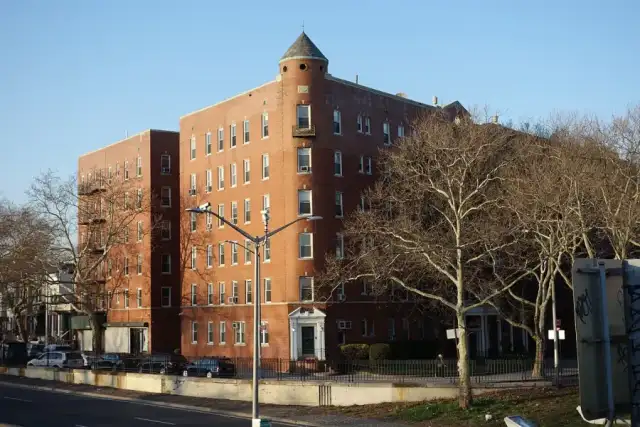
Talk with JosephTop photo via Wikimedia Commons, resized and cropped: 50 Ocean Parkway, Brooklyn by Tdorante10, CC BY-SA 4.0.

The DeVito Team of Keller Williams Realty Greater Nassau
Joseph DeVito, NY Licensed Associate Real Estate Broker
400 Garden City Plaza Ste 438, Garden City, NY 11530 · (516) 770-3782