Brooklyn Coops for Sale
The coop market in Brooklyn, tracked as its own segment — what coops actually sold for in the public record, measured for coops specifically, not blended with houses.
What co-ops actually sold for in Brooklyn
In the year to September 2026, 1,954 co-op sales were recorded with the City across 819 buildings — every sale, including the ones never listed with a broker.
| Year | Median | Sales |
|---|---|---|
| 2019 | $400K | 2,181 |
| 2020 | $435K | 1,856 |
| 2021 | $490K | 2,891 |
| 2022 | $440K | 2,752 |
| 2023 | $425K | 2,036 |
| 2024 | $445K | 1,920 |
| 2025 | $450K | 1,952 |
The median recorded co-op price in 2025 was 13% higher than 2019. Year-to-year movement in a median also reflects which buildings happened to sell, not value alone.
The co-op stock itself
800 substantial co-op buildings in Brooklyn, holding about 74,987 homes between them, and we hold a managing agent on file for 749 of them.
| Building | Homes | Built | Managed by |
|---|---|---|---|
| 2885 West 12 Street | 1,578 | 1960 | Metro Management Development, Inc. |
| 2830 Ocean Parkway | 1,547 | 1962 | Amalgamated Warbasse Houses, Inc. |
| 2790 West 5 Street | 1,038 | 1963 | Amalgamated Warbasse Houses, Inc. |
| 175 Adams StreetDowntown Metrotech | 1,022 | 1950 | AKAM |
| 30 Montrose Avenue | 774 | 1963 | Metro Management Development, Inc. |
| 29 Leonard Street | 774 | 1973 | Metro Management Development, Inc. |
| 54 Boerum Street | 772 | 1965 | Metro Management Development, Inc. |
| 1655 Flatbush AvenueFlatbush East | 634 | 1964 | AKAM |
Where these come from. New York City’s public record of recorded sales, October 2025 to September 2026, with building details from the City’s property files and managing agents from HPD registrations. Recording lags a sale by roughly three months, so this describes the period stated rather than today. Sales of whole buildings are excluded — the City records those once per apartment, which would otherwise put one building’s price on dozens of “sales”. What a deed record cannot show is the listing side — days on market, asking prices and inventory come from an MLS, and Brooklyn homes are listed on one we do not carry yet.
Brooklyn co-ops by neighbourhood
Recorded sales in the year to September 2026, busiest first. Each figure is for the neighbourhood’s ZIP, not the street.
| Neighbourhood | Median | Sales |
|---|---|---|
| Brooklyn Heights | $735K | 287 |
| Fort Greene | $735K | 287 |
| Brighton Beach | $314K | 211 |
| Sheepshead Bay | $314K | 211 |
| Bay Ridge | $355K | 180 |
| Park Slope | $950K | 157 |
| Kensington | $585K | 139 |
| Windsor Terrace | $585K | 139 |
| Mapleton-Midwood (West) | $365K | 128 |
| Midwood | $365K | 128 |
| Prospect Heights | $875K | 98 |
| Madison | $240K | 93 |
| Coney Island | $400K | 75 |
| Clinton Hill | $775K | 70 |
| Bath Beach | $365K | 59 |
| Bensonhurst | $365K | 59 |
| Boerum Hill | $950K | 58 |
| Flatbush | $337K | 57 |
| Ditmas Park | $485K | 56 |
| Flatlands | $250K | 42 |
| Marine Park | $250K | 42 |
| Gravesend | $280K | 39 |
| Gravesend (East)-Homecrest | $280K | 39 |
| Sunset Park | $435K | 36 |
| Williamsburg | $453K | 34 |
| Prospect Lefferts Gardens | $445K | 33 |
| Borough Park | $550K | 22 |
| East Flatbush-Erasmus | $239K | 21 |
| Carroll Gardens | $1.78M | 17 |
| Bushwick | $40K | 10 |
| Dyker Heights | $755K | 10 |
| Sunset Park (East)-Borough Park (West) | $755K | 10 |
| Crown Heights | $350K | 8 |
| Greenpoint | $785K | 4 |
| Bedford-Stuyvesant | $357K | 3 |
| East Williamsburg | $445K | 2 |
| South Williamsburg | $445K | 2 |
Brooklyn Coop Questions, Answered
What is the coop board approval process in Brooklyn?
After a signed contract, the buyer submits a board package — typically a financial statement, tax returns, bank statements, reference letters, and the purchase application — followed by a board interview. Boards can decline without stating a reason (subject to fair-housing and other anti-discrimination laws). Timelines vary by building. A well-prepared package is the single biggest thing a buyer controls.
What happens at a coop board interview, and how should I prepare?
Most boards interview after reviewing your financial package — usually a short in-person or video meeting with a handful of board members. Expect questions about your finances, why you want to live in the building, and how you'll use the apartment; boards are gauging fit as much as qualification, and they cannot legally ask about protected categories like family status, religion, or national origin. The best preparation is a clean, complete board package beforehand — interviews go smoothly when there's nothing left for the board to ask about.
What does coop maintenance actually cover?
Maintenance is your monthly payment to the coop corporation, and it is one bill covering several things at once: the building's property taxes, your share of the underlying mortgage if the building carries one, staff and day-to-day operations, insurance, and contributions to reserves. Because the property taxes sit inside it, a portion of your maintenance is typically tax-deductible — your accountant can tell you which portion for a given building. The current maintenance figure appears on every coop listing we show. One note if you are comparing against condos: a condo's common charges exclude taxes and any underlying mortgage, so a coop maintenance figure will look higher for the same apartment without actually costing more.
How much do I need to put down on a coop?
Each coop building sets its own minimum, and it is a building rule rather than a lender rule — so it applies even to a buyer a bank would happily approve. Of the 1,012 co-op corporations whose minimum down payment we have confirmed from MLS listings, 75% require 20%, 16% allow 10%, and 8% require 25% or more. Some also require post-closing liquidity — months of mortgage and maintenance held in reserve after closing — on top of the down payment. We publish the confirmed minimum on the building pages where we can verify it, and confirm it listing by listing otherwise.
What debt-to-income ratio do coop boards look for?
Many boards set a maximum share of your gross income that your total housing costs and debt payments may take up. The threshold, and how strictly it's enforced, is set by each building. It's a board policy, not a lender requirement, and it's worth checking before you fall for a unit that a particular building's math won't support.
What is a post-closing liquidity requirement?
Some coop boards require you to keep a set amount of cash or liquid assets, measured in months of mortgage and maintenance payments, in reserve after your closing costs and down payment are paid, as proof you can weather a job loss or emergency without falling behind. It's on top of the down payment, not part of it, and requirements vary widely by building.
What is a sponsor unit, and can I buy a coop without board approval?
A sponsor unit is an apartment still owned by the entity that originally converted the building to a coop, rather than by an individual shareholder. Sponsor sales commonly skip the financial-package-and-interview process a resale requires, though the sponsor may still have its own approval or financing conditions, and house rules like sublet limits still apply once you own it. Sponsor units are worth asking about specifically if board approval is your biggest concern.
How can I check a coop building's finances before buying?
The board package process gives you access to the building's financial statements, board meeting minutes, reserve fund balance, and any pending assessments or litigation — an accountant or attorney can spot warning signs like thin reserves, rising underlying debt, or deferred maintenance that a listing description won't mention. This is exactly where having an attorney's eye on your deal from the start pays off, rather than discovering an issue after you're under contract.
What is a flip tax and who pays it?
A flip tax is a transfer fee charged by the coop corporation when a unit sells — commonly a percentage of the sale price or a per-share amount. Who pays it is set by the building's rules and the contract, and it varies by building. It belongs in any serious net-proceeds estimate, which is why our seller conversations start with the building's actual rules.
Can I sublet a coop apartment?
Only if the building allows it. Sublet policies range from prohibited, to allowed after a minimum period of owner occupancy, to allowed with board approval and fees. If rental flexibility matters to you, the proprietary lease and house rules need to be checked before you make an offer — not after.
Why are coop monthly charges higher than condo common charges?
Coop maintenance usually bundles the building's underlying mortgage and property taxes along with operations — condo owners pay property taxes separately. So a coop's higher monthly number is not automatically a worse deal; part of it may also be tax-deductible. Comparing a coop and condo fairly means comparing the all-in monthly cost, which we break down for every listing we work on.
Buying or selling a coop in Brooklyn?
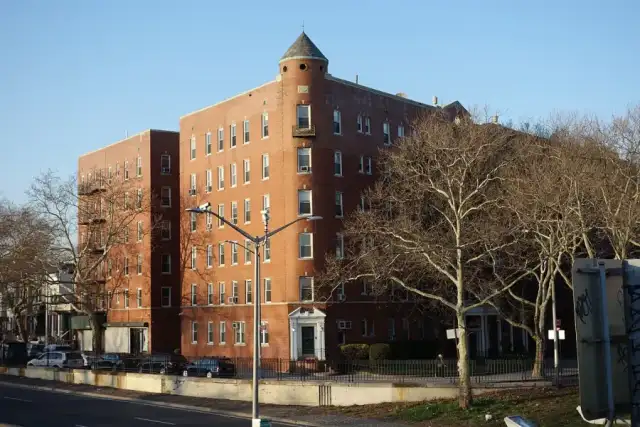
Talk with JosephTop photo via Wikimedia Commons, resized and cropped: 50 Ocean Parkway, Brooklyn by Tdorante10, CC BY-SA 4.0.

The DeVito Team of Keller Williams Realty Greater Nassau
Joseph DeVito, NY Licensed Associate Real Estate Broker
400 Garden City Plaza Ste 438, Garden City, NY 11530 · (516) 770-3782